.
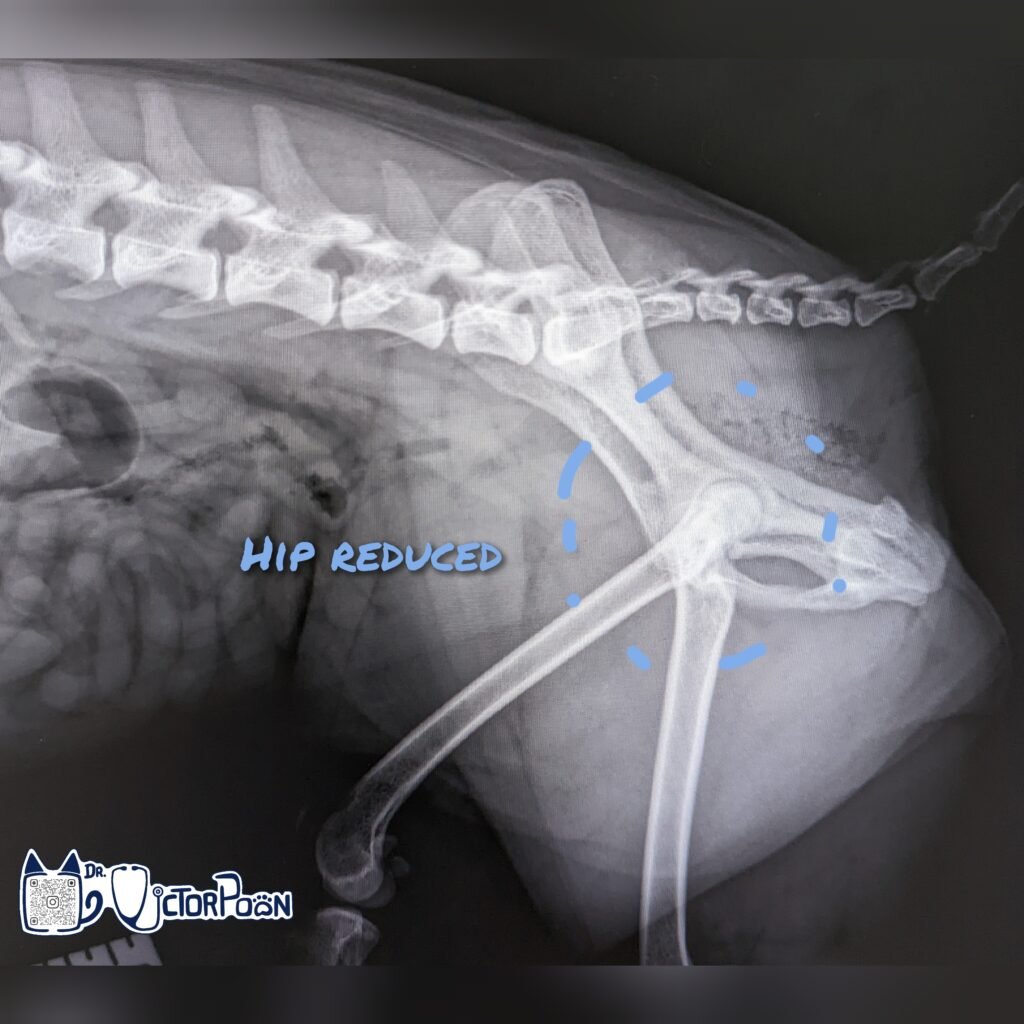
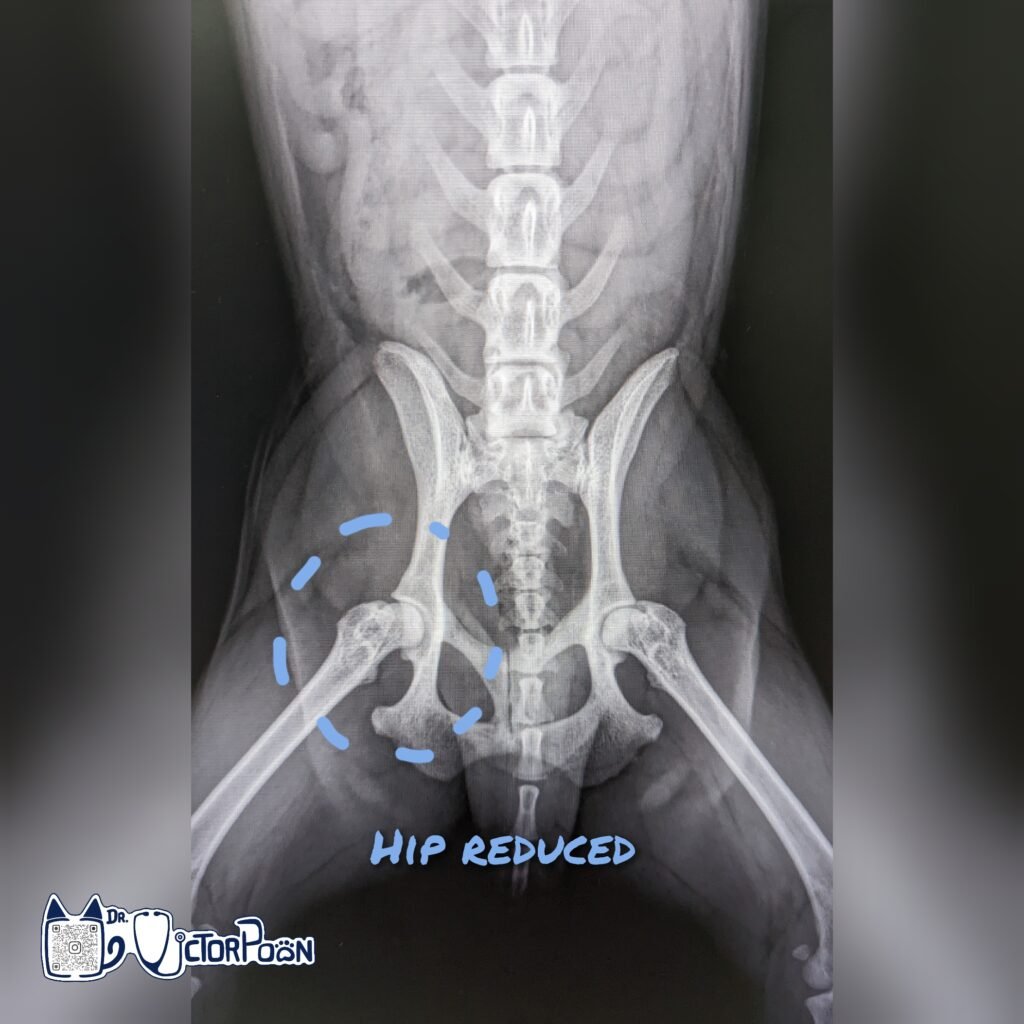
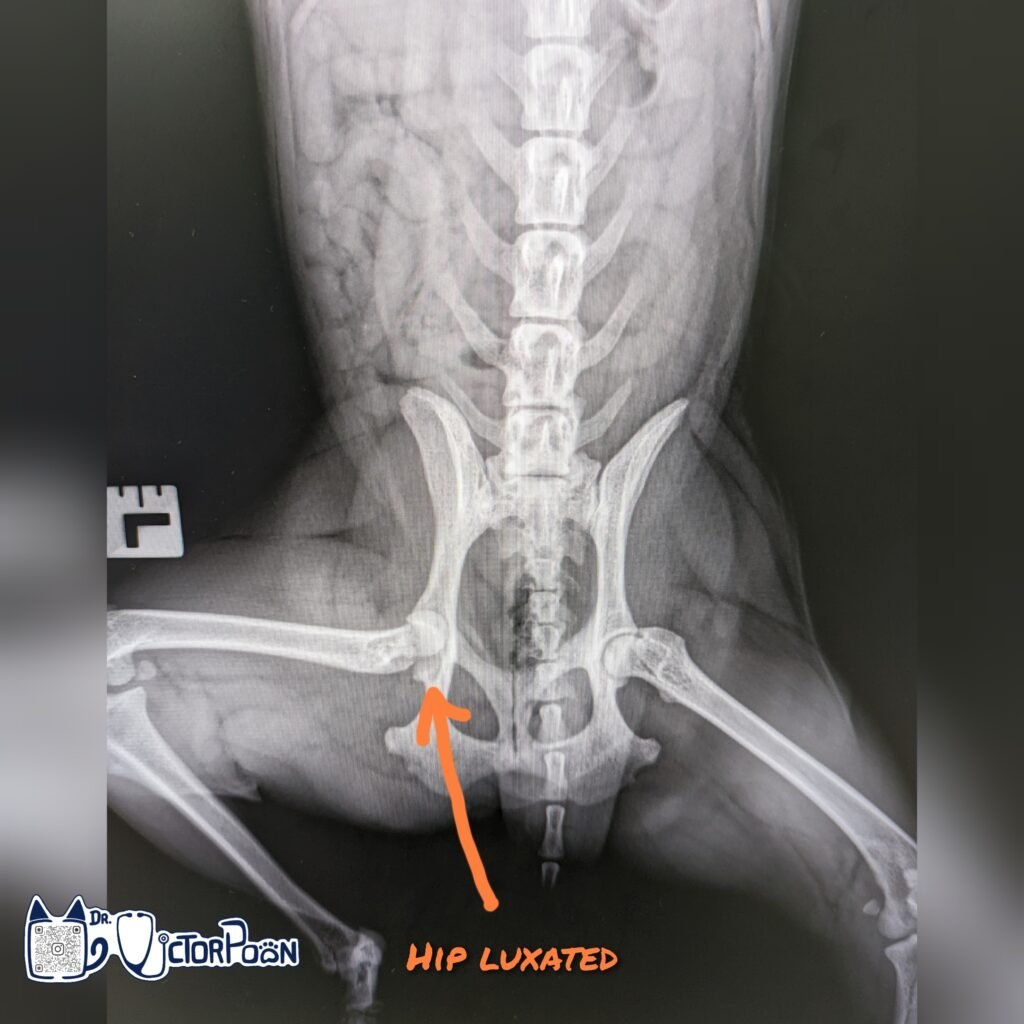
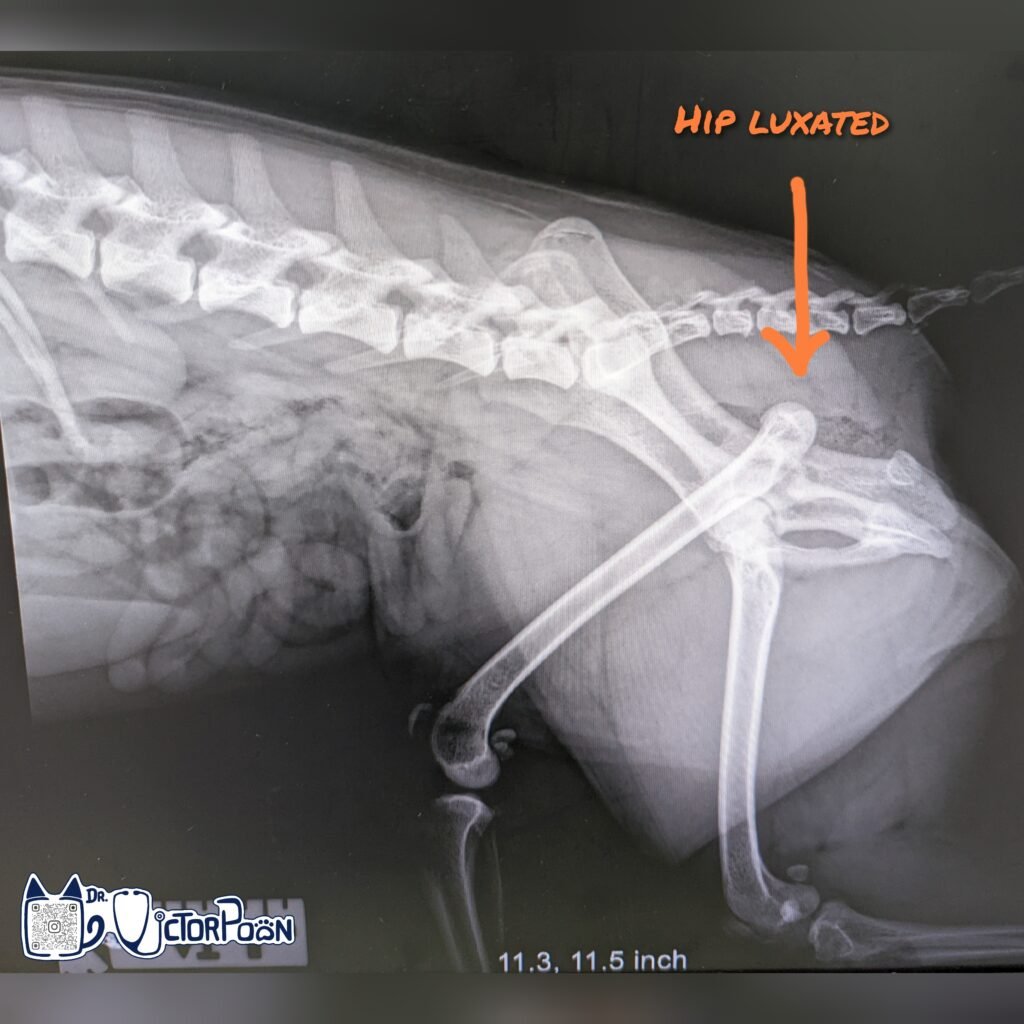
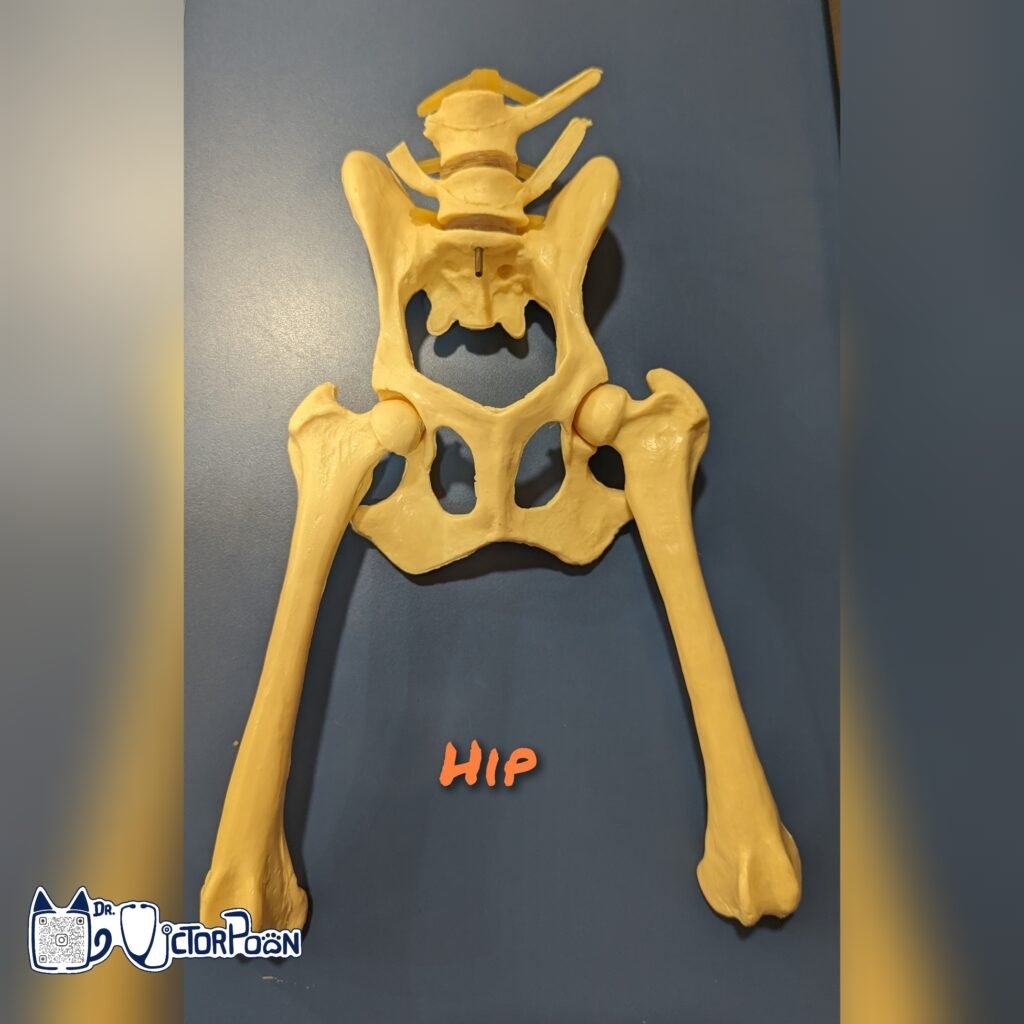
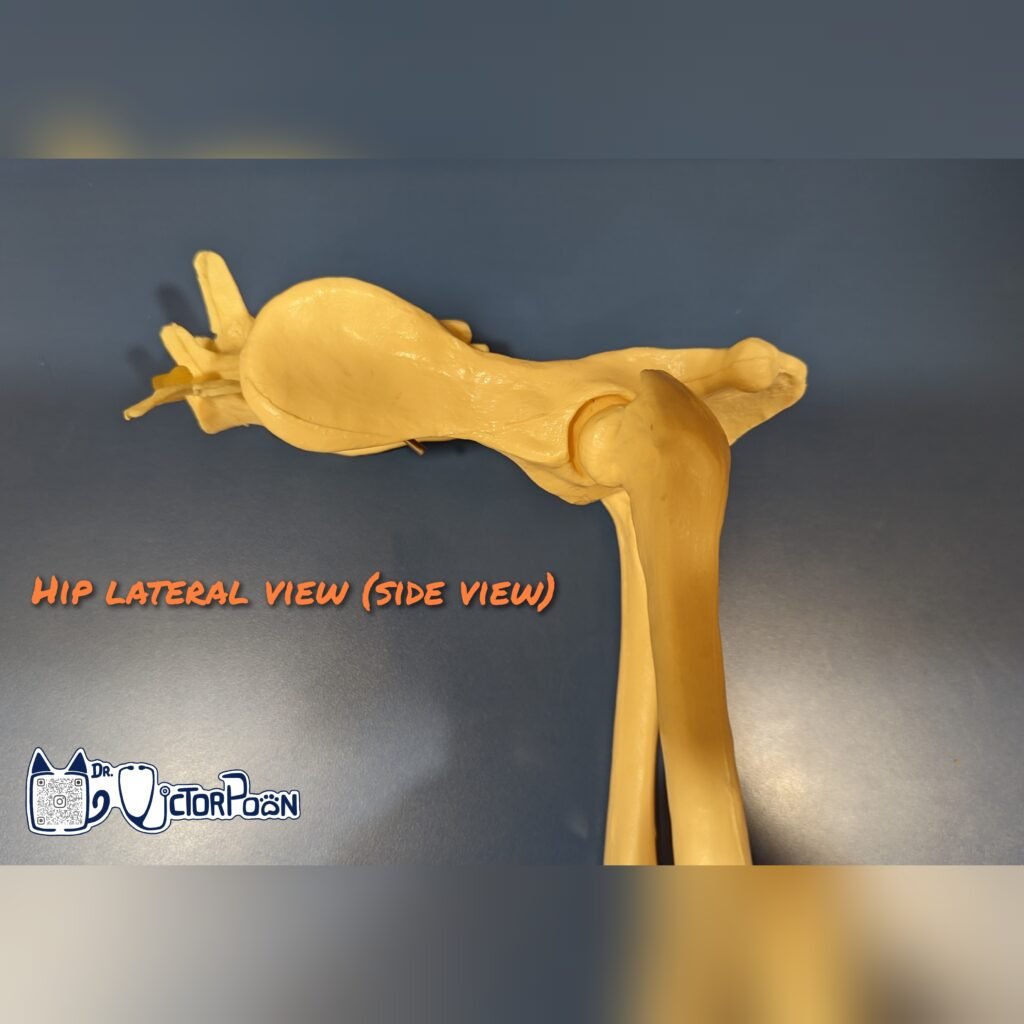
The most common cause of hip luxation is trauma and some of these patients have underlying hip dysplasia which predispose them to luxation with less severe trauma. The femoral head is usually dislocated dorsal to the acetabular rim, with a craniodorsal (front and up) position being the most common. It is essential to confirm hip luxation orientation by X-ray because the treatment plan is different. Closed reduction should be attempt for acute, uncomplicated hip luxation (normal looking acetabular rim and femoral head)
.
Treatment involves closed reduction under general anesthesia. After successful closed reduction (femoral head returned to its normal location), immobilization of the hip with strict cage confinement +/- bandage is recommended so that fibrous healing of damaged soft tissues can occur. If conservative treatment fails, then surgical options can be considered.
.
—