
What is Hypertrophic Cardiomyopathy (HCM) ?
Hypertrophic cardiomyopathy (HCM) is the most common heart disease in cats, affecting approximately 15% of the general cat population. It is characterized by an abnormal thickening (hypertrophy) of the left ventricular heart muscle. This thickening makes the heart chamber less flexible and less efficient at pumping blood.
In most cats, the exact cause is unknown (idiopathic). However, we know that certain pedigree breeds, such as Maine Coons, Ragdolls, and Persians, are at higher risk, and specific genetic mutations have been identified in Maine Coons and Ragdolls. Additionally, other conditions like hyperthyroidism or high blood pressure can cause the heart muscle to thicken, mimicking the appearance of HCM.
What are the clinical signs that an owner should look for?
Many cats with HCM have “subclinical” disease, meaning they show no clinical signs for years. However, as the disease progresses, you should watch for:
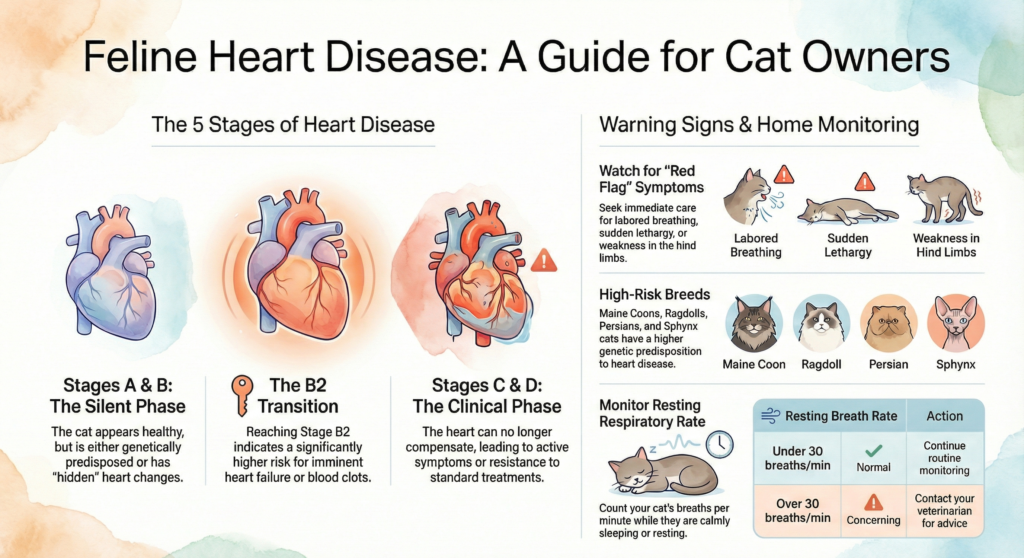
- Labored or heavy breathing: This is the most common sign and often indicates fluid buildup in the lungs or chest (congestive heart failure).
- Lethargy or hiding: Cats may become less active or hide more than usual.
- Sudden weakness or paralysis: Specifically in the hind limbs, which may be caused by a blood clot (arterial thromboembolism).
- Fainting (syncope): Brief periods of collapse or seizure-like activity.
- Sudden change in appetite: A decrease in interest in food.
What are the diagnostic tests that we use to diagnose HCM?
Because many cats show no signs, we often rely on a combination of tests to confirm a diagnosis:
- Physical Examination: We listen for heart murmurs, “gallop” sounds, or irregular rhythms (arrhythmias).
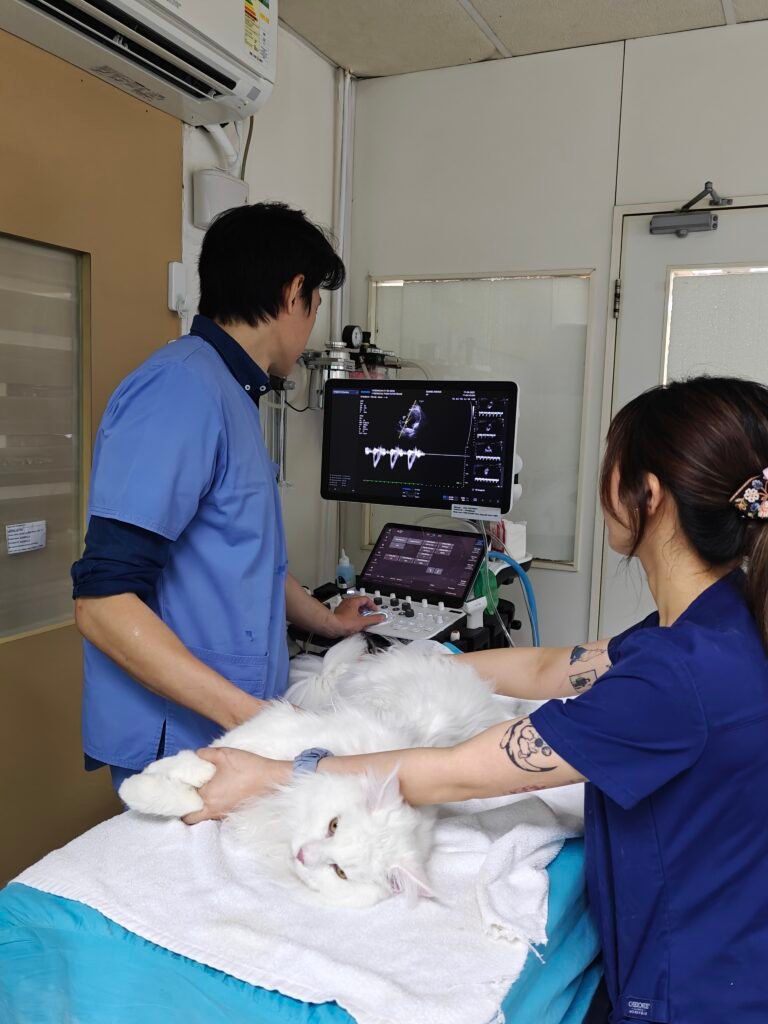
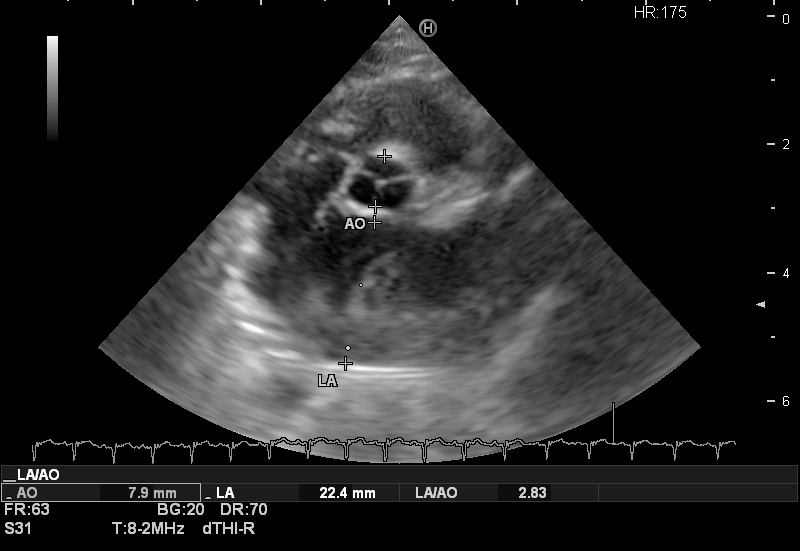
- Echocardiography (Heart Ultrasound): This is the gold standard test. It allows us to directly measure the thickness of the heart walls and the size of the heart chambers.
- Blood Pressure and Thyroxine (T4) Tests: These help us determine if the heart thickening is caused by high blood pressure or hyperthyroidism rather than primary HCM.
- Cardiac Biomarkers (NT-proBNP): This blood test measures a protein released when the heart is stretched, helping us differentiate heart disease from lung disease in cats with breathing issues.
- Chest X-rays: These are used to look for heart enlargement and signs of fluid in the lungs.
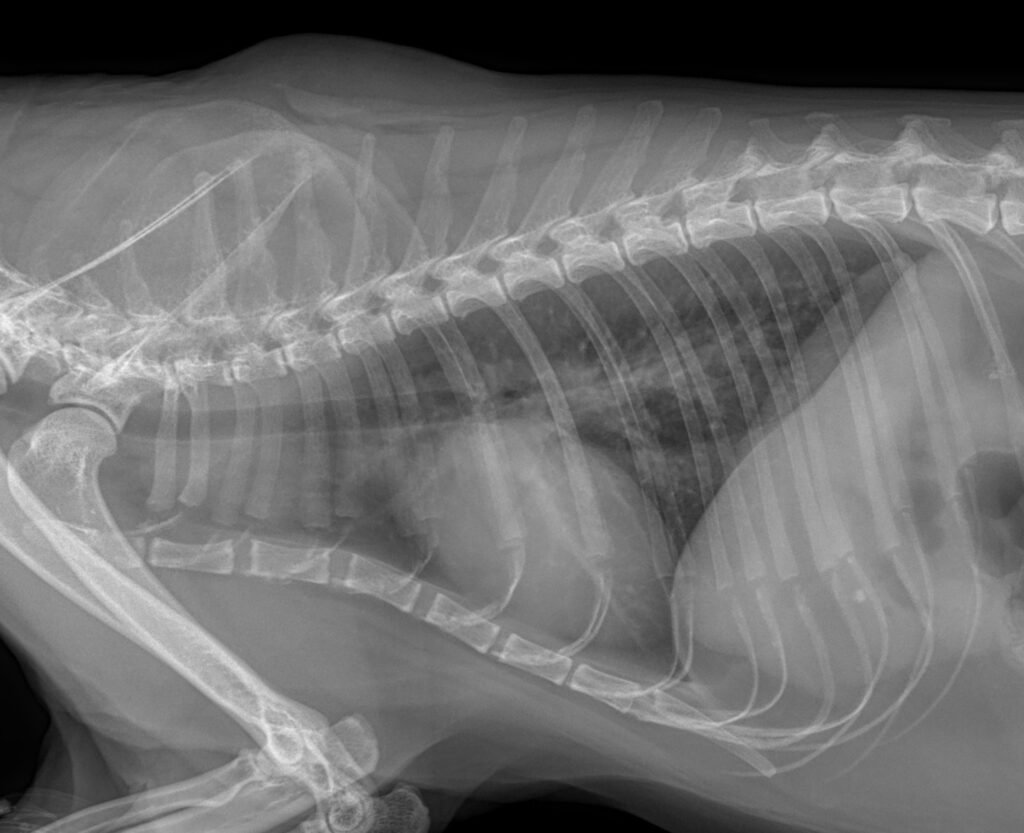
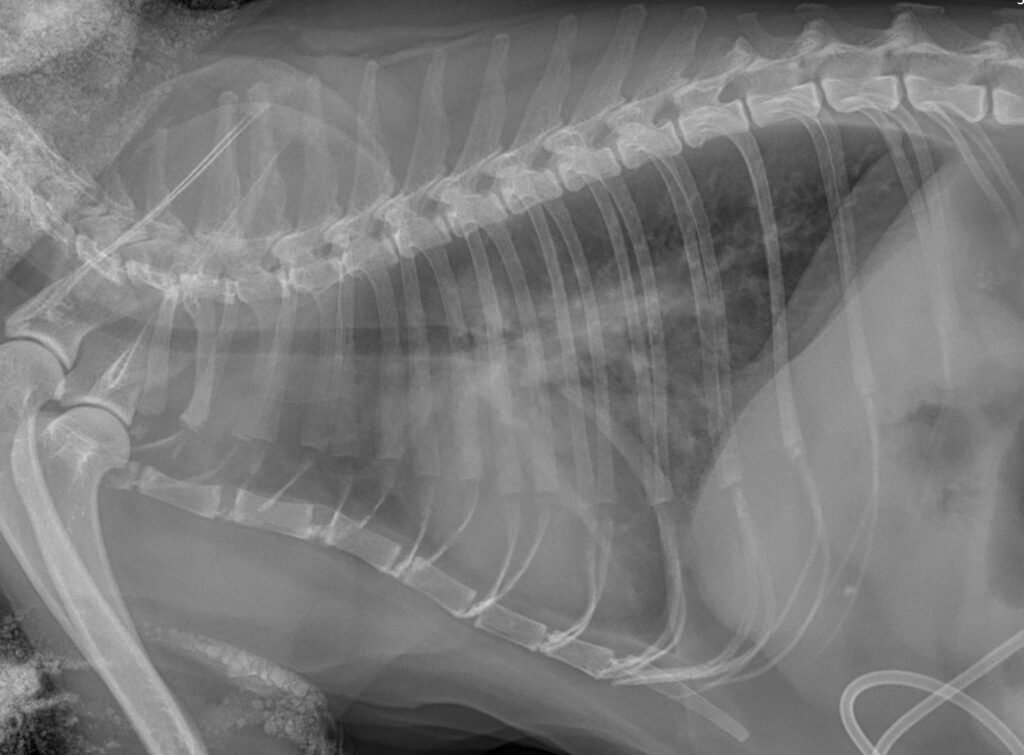
Congestive heart failure on the Right x-ray
What are the stages for HCM? We use a staging system to determine the severity of the disease and guide treatment:
- Stage A: Cats at high risk for developing the disease (e.g., specific breeds or those with a known genetic mutation) but who currently have healthy hearts.
- Stage B1: Cats with HCM who are at low risk for immediate complications.
- Stage B2: Cats with HCM who are at a higher risk for heart failure or blood clots, typically identified by an enlarged left atrium.
- Stage C: Cats that currently have, or previously had, clinical signs of heart failure or blood clots.
- Stage D: Cats with advanced heart failure that is no longer responding well to standard therapy.
What does the treatment involve? Treatment is tailored to your cat’s specific stage:
- Early Stages (B1/B2): Often, no medication is needed for B1 cats. For B2 cats at high risk for blood clots, we typically prescribe blood thinners.
- Heart Failure (Stage C): This requires diuretics to remove fluid from the lungs. We may also use medications like pimobendan to help the heart pump better or ACE inhibitors to manage blood pressure within the heart.
- Acute Crisis: If a cat is in respiratory distress, they often require hospitalization for oxygen therapy and injectable medications.
What should an owner monitor at home? Home monitoring is the most critical part of managing a cat with HCM:
- Resting Respiratory Rate (RRR): This is the most important tool for owners. Count how many breaths your cat takes per minute while they are calmly sleeping. A consistent rate under 30 breaths per minute is the goal. If the rate is consistently rising or exceeds 30, seek medical attention immediately.
- Activity and Appetite: Monitor for any sudden decreases in energy or interest in food.
- Mobility: Watch for any dragging of the legs or signs of pain, which could indicate a blood clot.
- Stress Reduction: Minimizing stress at home is vital for heart health.