
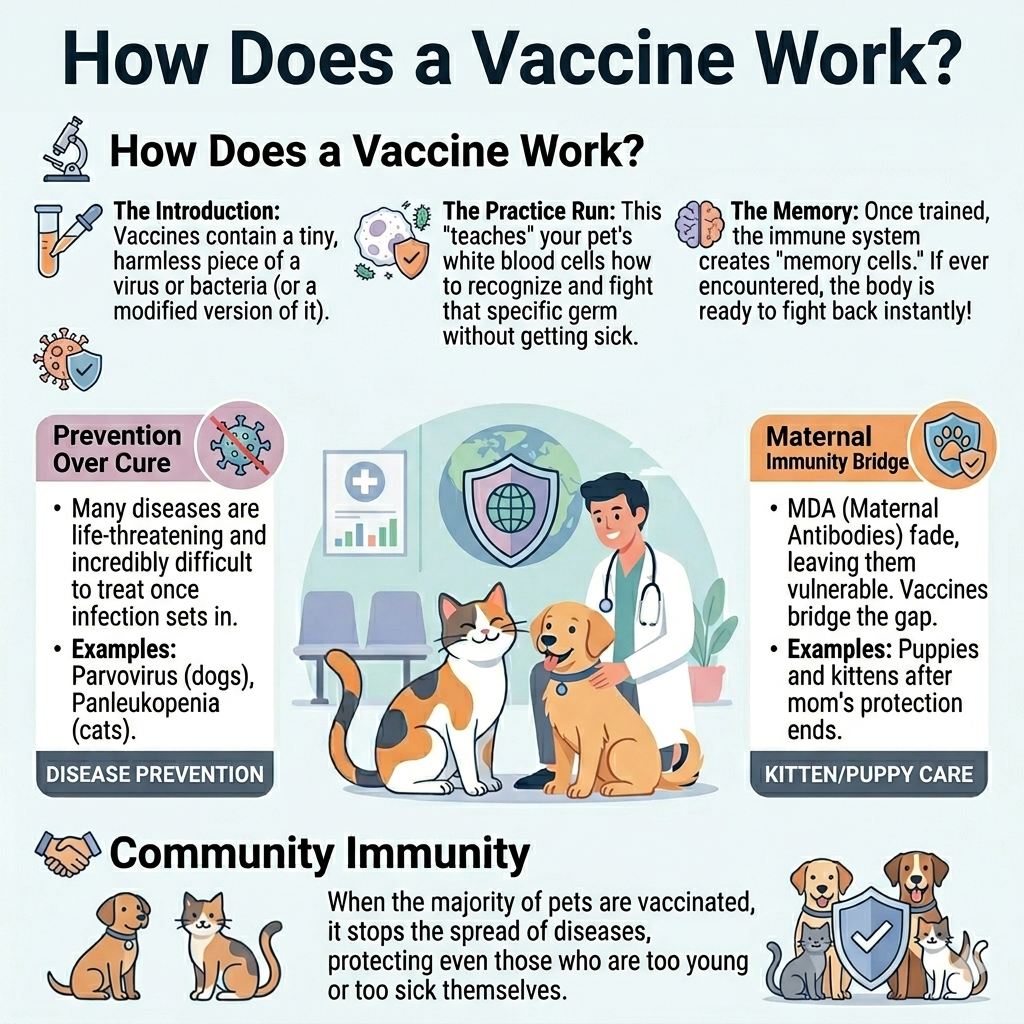
Think of a vaccine as a “training manual” for your pet’s immune system.
- The Introduction: Vaccines contain a tiny, harmless piece of a virus or bacteria (or a modified version of it).
- The Practice Run: This “teaches” your pet’s white blood cells how to recognize and fight that specific germ without the pet actually getting sick.
- The Memory: Once trained, the immune system creates “memory cells.” If your pet ever encounters the real disease, their body is ready to fight back instantly!.
🛡️ Why is it Important for Dogs & Cats?
- Prevention Over Cure: Many diseases we vaccinate against, like Parvovirus in dogs or Panleukopenia in cats, are life-threatening and incredibly difficult to treat once an infection sets in.
- Bridging the “Maternal Gap”: Puppies and kittens start with temporary antibodies from their mother’s milk (MDA). However, these eventually fade, leaving them vulnerable. Vaccines bridge the gap between when mom’s protection ends and their own immunity begins.
- Community Immunity: When the majority of pets in our community are vaccinated, it stops the spread of infectious diseases, protecting even those who are too young or too sick to be vaccinated themselves.
🛡️ The “Maternal Antibody” Block
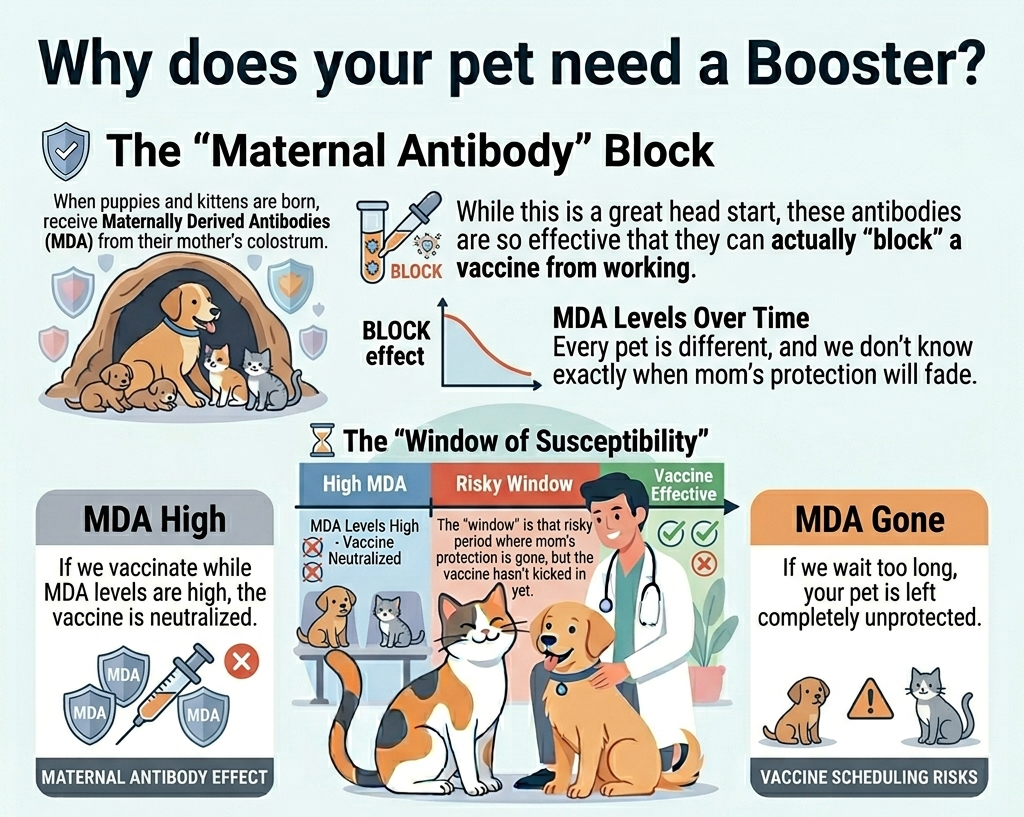
When puppies and kittens are born, they receive Maternally Derived Antibodies (MDA) from their mother’s colostrum. While this is a great head start, these antibodies are so effective that they can actually “block” a vaccine from working.
⏳ The “Window of Susceptibility”
Every pet is different, and we don’t know exactly when mom’s protection will fade.
- If we vaccinate while MDA levels are high, the vaccine is neutralized.
- If we wait too long, your pet is left completely unprotected.
- The “window” is that risky period where mom’s protection is gone, but the vaccine hasn’t kicked in yet.